
The Emotional Magnetic Load: this invisible weight that's draining you
Everything you need to know about the Emotional Magnetic Load (EML), the hidden emotional buildup that’s quietly exhausting your energy, clouding your decisions, and straining your relationships at work.
How high is your EML? Take this Regenerative Work Assessement
What You’re Feeling (or not...) has a Name
You may not see it.
You may not have a word for it.
But you’ve felt it.
That subtle tightness in your chest before a meeting.
The way your shoulders rise when an unexpected message hits.
The mental fog that sets in after too many back-to-back calls.
The way you snap at someone you care about—and wonder why later.
This is Emotional Magnetic Load—or EML.
Understanding Emotional Magnetic Load
Emotional Magnetic Load (EML) is the invisible emotional weight we carry, often without realizing it.
It builds up over time from all the emotions we don’t fully process, like:
- Stress we push trough
- Tension we ignore
- Fear we hide
- Disappointments we never talk about
- Pressure we normalize
We’ve learned to “keep going,” but what we don’t release, we carry. And over time, this emotional weight starts to affect:
- How clearly we think
- How we feel in our body
- How we react under pressure
- Who we connect with others
- How much energy we have

Drawings are worth a thousands words
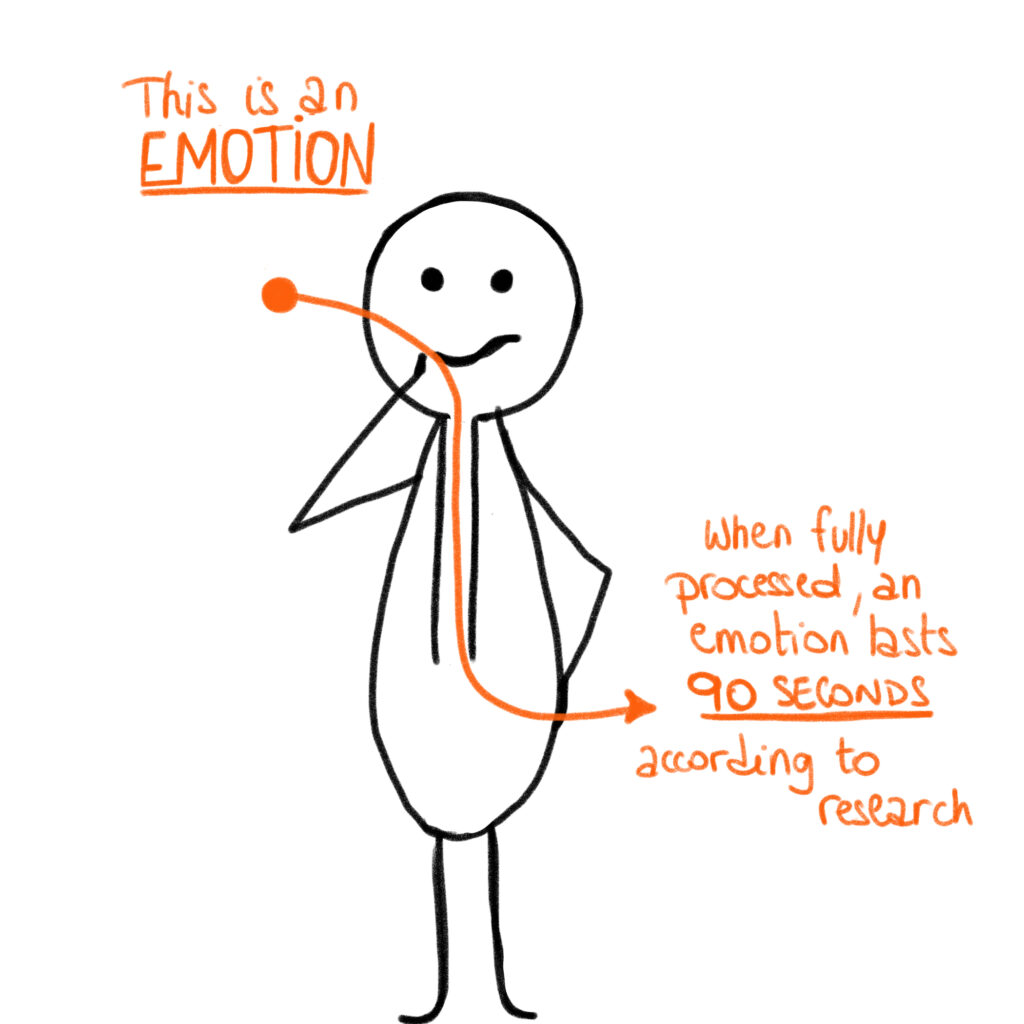
Imagine the emotion you’re feeling is like a ball. The purely physical, chemical reaction of an emotion, the feeling part, typically lasts about 90 seconds, according to research. It spikes, it passes, and then the chemical process is complete.
But emotions are not always processed…
They are 4 ways to deal with emotions:
- AVOID them
- REPRESS them
- ESCALATE
- ACCEPT & PROCESS them
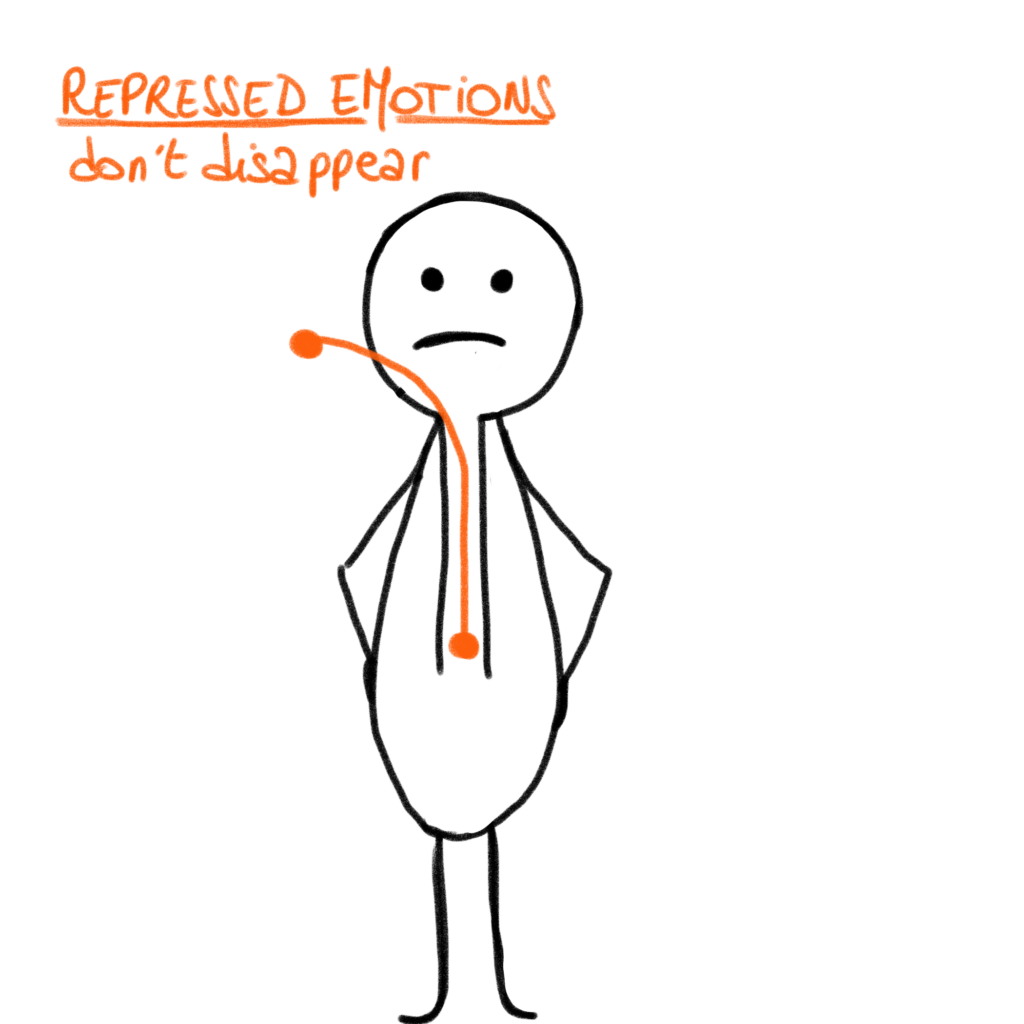

When emotions like stress, fear, frustration, or disappointment aren’t fully felt or expressed, they don’t just disappear—they settle in the body. Over time, this emotional buildup creates physical tension, shallow breathing, fatigue, or a constant sense of being “on edge.”
You may not remember the specific moment that caused it, but your body does.
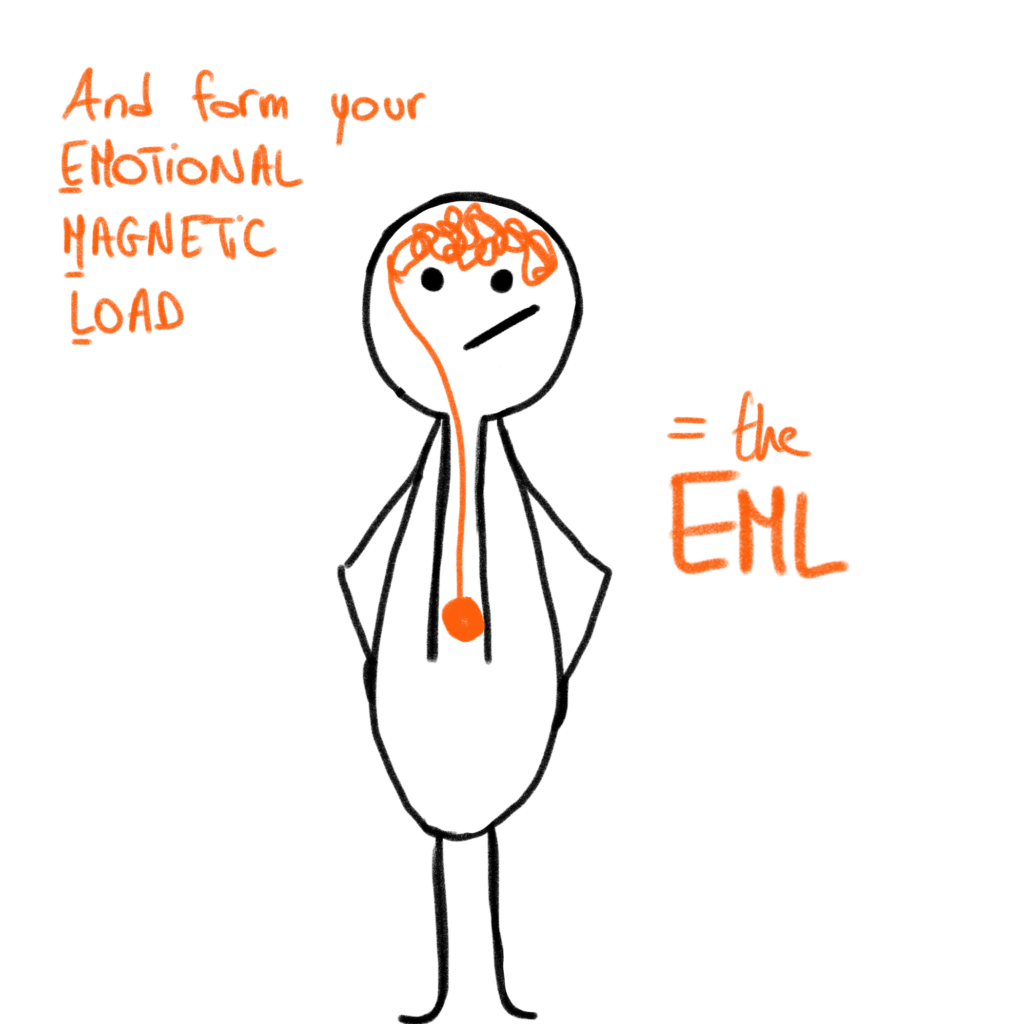
Over time, that buildup shapes how you feel, how you react, and how much energy you have.
This is your Emotional Magnetic Load.
The Emotional Magnetic Load is unhealthy and hijacks the mind:
- Overthinking
- Ruminating
- Complexifying
- Catastrophizing
- Misinterpreting
- Escalating
- Loop in mental noise
And leads to unproductive behaviors:
- Micromanaging
- Self-sabotaging
- Blaming
- Avoidance
- Overcommitting
- Overreacting (defensive of offensive)
- Procrastinating
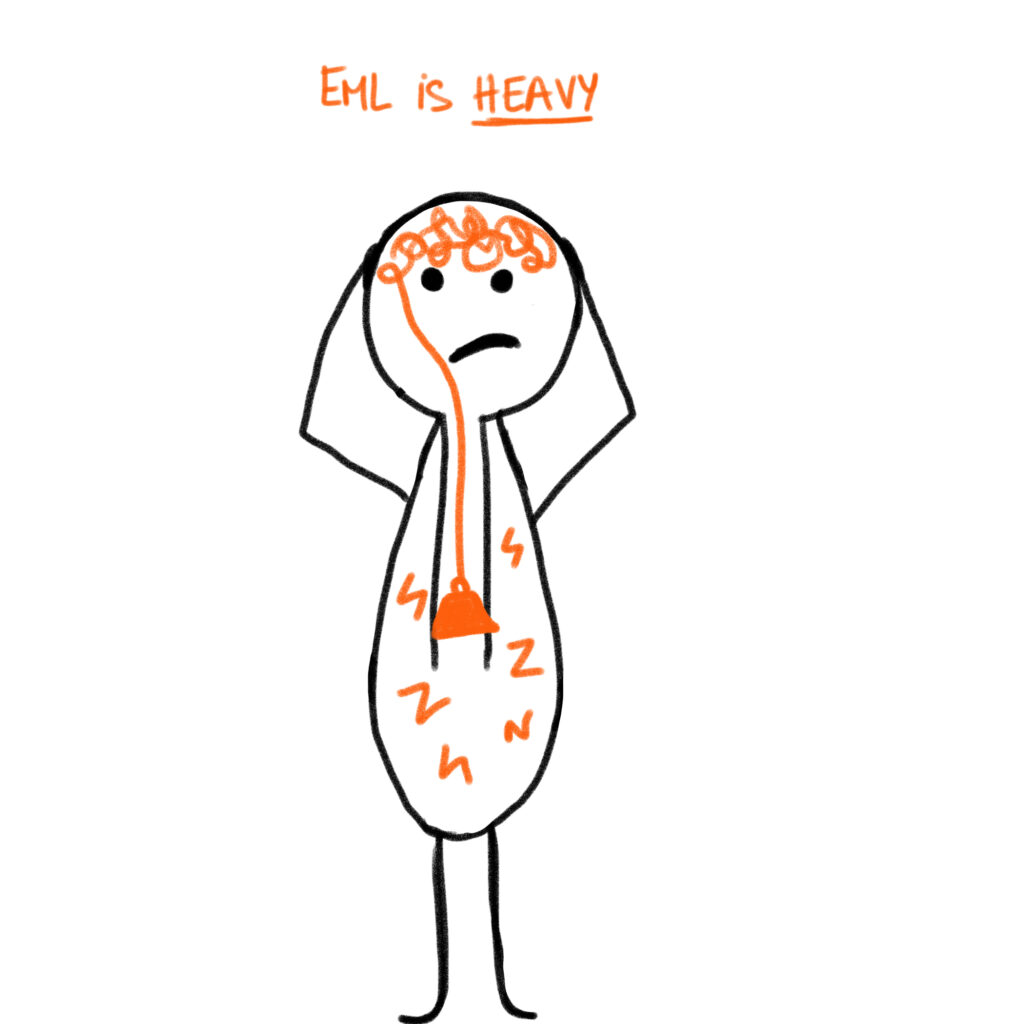
EML keeps the body in chronic stress and the nervous system in contant alert.
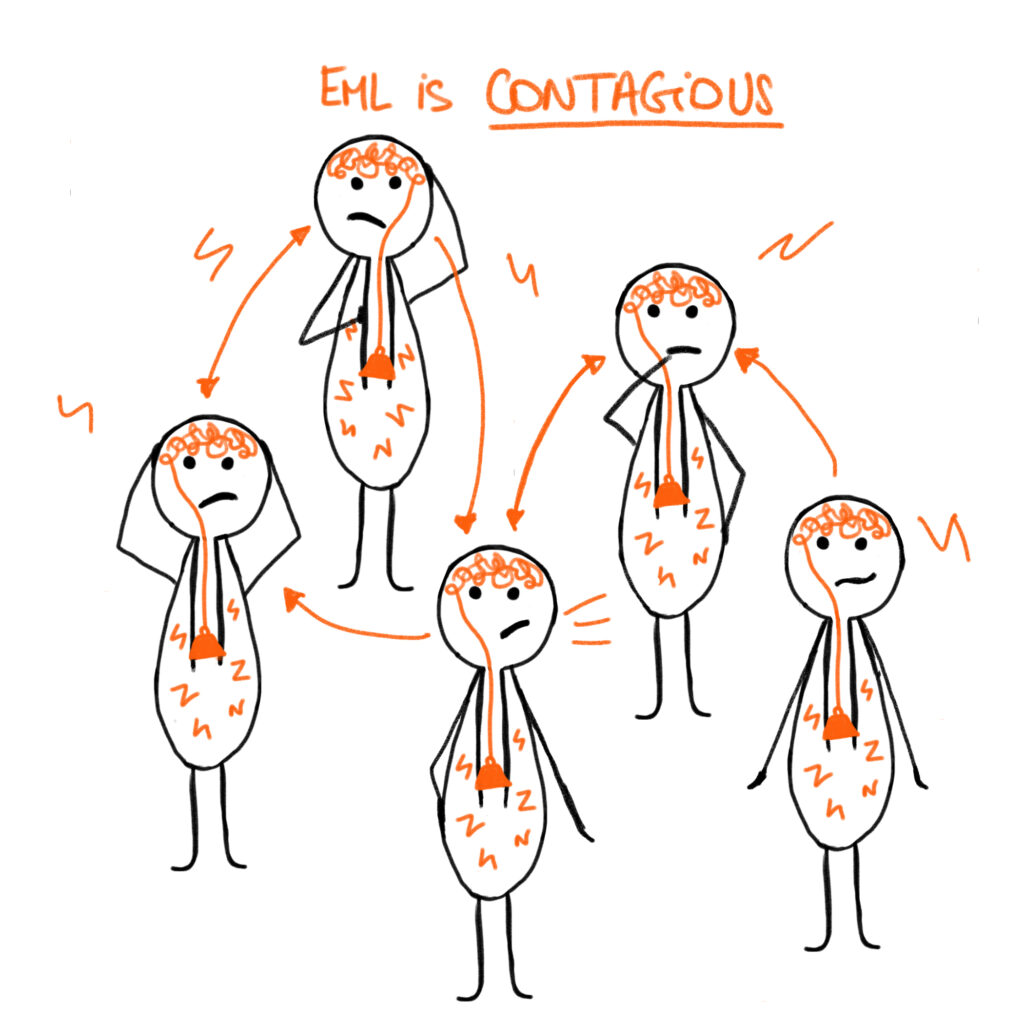
Through mirror neurons and emotional mirroring, we naturally absorb the stress or calm of those around us. It’s called co-regulation, and it means your emotional state can influence others, just as theirs can shape yours.
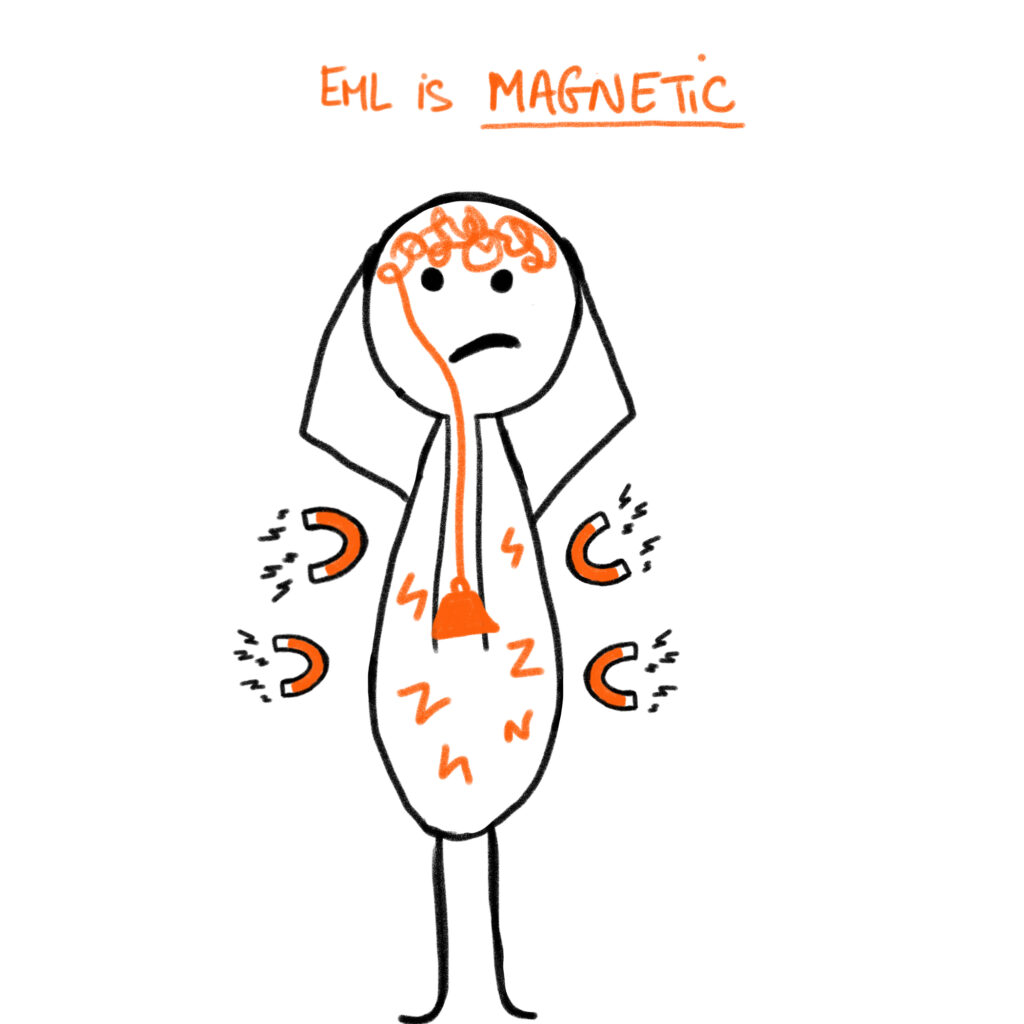
Emotional Magnetic Load is called magnetic because it attracts similar experiences.
When emotions like fear, stress, or frustration stay stuck in your system, they subtly shape how you see and react to the world. You’re more likely to interpret situations through that emotional filter, and to behave in ways that confirm it.
In other words: what you carry inside, you tend to recreate outside.
EML can be:
Active
It's triggered by the moment, reactive, intense. Others feel your charge.
Passive
It lives in the background, stored, subtle, shaping patterns. Other feel your tension
So, what do we do now?
Once you understand what Emotional Magnetic Load (EML) is, and begin to recognize it in yourself or others, the next step is to do something with it.
Awareness alone isn’t enough to make the emotional weight disappear. It needs to be released. That doesn’t mean analyzing every emotion or solving everything at once. It means creating space, physically and mentally, for your system to process and let go of what it has been holding.
Releasing EML is a gradual process, but it’s the starting point for working and living with more clarity, energy, and stability.
How Do We Release The Emotional Magnetic Load?
You don’t need years of therapy or major life changes to start releasing Emotional Magnetic Load.
It begins with small, intentional actions like pausing, breathing, and noticing what’s happening in your body instead of ignoring it.
Releasing EML means giving space to emotions without needing to analyze or suppress them. This might involve taking a walk, saying something you’ve been holding in, or simply letting an emotion pass without resistance.
This is what emotional regulation really is: helping your system return to balance. As the weight lifts, clarity, focus, and calm return, allowing you to respond more effectively, instead of reacting from built-up tension.
Releasing Emotional Magnetic Load: the First Step to Regenerative Work
Emotional Magnetic Load silently drains your energy, narrows your thinking, and shapes your reactions. When you begin to release it, you create the conditions for regeneration—physically, mentally, and emotionally.
This is not about doing more. It’s about clearing what gets in the way. Here’s what starts to shift when EML is released:
- You gain mental clarity and make decisions with more ease.
- Your energy and focus increase, without needing to push harder.
- Communication improves, and relationships become less reactive.
- Your nervous system stabilizes, even in high-pressure environments.
- You create the foundation for sustainable performance, at work and beyond.
Releasing EML is not the end goal. It’s where Regenerative Work begins.
Check your Regenerative Work level here:
All You Need To Know about Emotional Magnetic Load (EML)
What is Emotional Magnetic Load (EML)?
Emotional Magnetic Load (EML) is the invisible emotional buildup we carry from unprocessed stress, tension, and emotional experiences, especially in the workplace. Over time, unspoken frustrations, unmet needs, and micro-emotional moments accumulate. This emotional residue weighs us down, impacts our thinking, and influences how we show up. EML is stored in the body and nervous system, which is why you may feel tension even without an obvious reason. It doesn’t only come from big traumas, it builds up in everyday interactions. EML reduces our clarity, empathy, creativity, and overall presence. It can affect both individuals and teams.
Releasing Emotional Magnetic Load creates space for more grounded leadership, meaningful connection, and better decisions. EML is not a diagnosis; it’s a lens for understanding emotional accumulation at work.
Why do I feel emotionally drained after work, even on good days?
Even when nothing major goes wrong, you may still feel exhausted due to accumulated micro-stressors. Every difficult meeting, decision, conflict, or even withheld emotion adds weight. Over time, these emotional residues accumulate and lead to a sense of depletion.
When there’s no space to process what you’re feeling, your emotional system stays activated. That’s what makes a “good day” still feel tiring. This is Emotional Magnetic Load in action.
You might be checking off tasks but ignoring your inner emotional landscape. Leaders and employees alike face this, especially in high-pressure environments. Until you learn to recognize and release that load, you carry it with you, day after day.
How do I know if I'm carrying Emotional Magnetic Load?
You might notice that you feel reactive, tired, or easily overwhelmed. Physical signs include tension in the body, shallow breathing, or disrupted sleep. Emotionally, you may feel like you’re operating on edge, or emotionally numb. You may avoid certain conversations or find yourself snapping over minor issues. EML can also show up as a lack of motivation or emotional detachment. Often, people carry this load silently, thinking it’s just stress or their personality. But when you pause and reflect, you may realize you’re carrying far more than the present moment. Recognizing these patterns is the first step toward releasing them.
Why do I overreact to small issues at work or at home?
Overreactions are often a sign that your system is overloaded. When you haven’t processed past stress or tension, your threshold for new challenges is lower. A small comment or change can trigger a big emotional response, not because of that moment, but because of what’s already stored in your body. That’s EML at work. Your emotional memory recognizes a pattern and reacts based on past experience, not present reality.
You’re not being irrational, you’re carrying too much. The key is not to judge the reaction but to get curious about what’s underneath. With awareness and release, you regain the ability to respond rather than react.
What’s the difference between stress and Emotional Magnetic Load?
Stress is often about what’s happening now: deadlines, conflict, or pressure. Emotional Magnetic Load is what stays in your system after those moments pass. It’s the emotional residue that lingers when you don’t have time or tools to process it.
Think of it like a backpack: stress is what goes in each day; EML is what you never take out. Over time, the load gets heavier—even if daily stress remains the same. That’s why managing stress isn’t enough. You need to release what’s already accumulated.
Recognizing this distinction is vital for sustainable well-being and leadership.
Why do meetings or team dynamics feel so heavy lately?
You’re probably picking up on unspoken emotional weight,yours or others’. In teams, EML is contagious. When tension isn’t addressed, it creates a field of pressure, defensiveness, or avoidance. You may feel tired after meetings even if nothing obvious happened. That’s because unresolved emotions, like fear, frustration, or mistrust, fill the room. People sense it in body language, tone, and presence.
Over time, this collective EML leads to disengagement, miscommunication, and burnout. Making space to surface tensions or share honestly can shift everything. Teams that regularly release emotional weight move faster, feel safer, and work better.
Can Emotional Magnetic Load affect leadership performance?
Absolutely. When leaders carry EML, they tend to become reactive, controlling, or disconnected. You might struggle to delegate, avoid conflict, or seek perfection out of fear. These patterns are often emotional, not strategic. They stem from old conditioning and unresolved tension, not incompetence. EML clouds your judgment, reduces empathy, and limits creativity. It makes it harder to be present with your team or adapt in uncertainty. The good news? When leaders work on releasing their EML, everything improves, from decision-making and innovation to trust and communication. Emotional clarity is a leadership skill, and EML release is how you develop it.
Why do I feel numb or disconnected from my work?
Emotional numbness is a common sign of emotional overload. When you’ve been absorbing stress without processing it, your system may shut down as a form of protection. You stop feeling because it’s too much to carry.
You may still perform, but the spark is gone. This disconnection is not laziness, it’s a signal. EML has likely built up over time and dulled your connection to purpose, people, and self. The solution isn’t to push harder, it’s to pause and release.
When you lighten the emotional load, energy and meaning return naturally. Disconnection is often a symptom, not the root problem.
How do I release Emotional Magnetic Load?
Start with awareness: notice where in your body or life you feel heaviness, tightness, or recurring tension. Then create moments for intentional release—through breathwork, movement, journaling, or simply pausing. Practices like EMDR, hypnotherapy, somatic coaching, or talking with a trusted person can help shift deeper layers. You don’t need to relive your past, but you do need to give your body a chance to process it. Even short daily moments of release matter.
Over time, your baseline changes—you feel clearer, lighter, and more grounded. Releasing EML isn’t one big event—it’s an ongoing, regenerative habit.
Why do I feel tense or anxious before even starting work?
You might be experiencing anticipatory stress, a signal that your system associates work with emotional discomfort or pressure. This often happens when you’ve accumulated unresolved tension (EML) over time. Even without a current crisis, your body remembers past stress. It braces for impact.
That’s why mornings feel heavy or your chest tightens before meetings. Your nervous system is on alert, preparing for the worst. The tension isn’t irrational, it’s learned. By releasing EML and practicing grounding rituals (like breathwork or nature time), you can reset this baseline and enter work with more calm and clarity.
How do I stay calm when others around me are reactive?
It starts with not absorbing their emotional load. Just because someone is reactive doesn’t mean you have to match their frequency. Use grounding practices like the AIR method: Acknowledge your own tension, Identify the emotion, Release through breath or movement. Stay connected to your body, drop your shoulders, unclench your jaw.
Remind yourself: “This isn’t mine to carry.” The more EML you’ve released, the less likely you are to react from your own stored tension. Calm isn’t passivity, it’s presence. And it’s contagious. When you stay regulated, you invite others to do the same.
Is emotional intelligence enough to manage stress at work?
Emotional intelligence (EQ) is a powerful foundation—but it’s not the whole story. EQ helps you recognize and manage emotions in the moment. But if you’re carrying years of unprocessed emotional weight, EQ alone can’t clear it. That’s where Emotional Magnetic Load comes in.
It adds a deeper layer: What happens when your reactions are shaped by old, unresolved emotions you aren’t even aware of? EQ helps you name emotions; EML work helps you release them. Together, they create true emotional mastery—not just control, but freedom.
Why do I feel like I'm “always on” but never making progress?
This is a sign of emotional depletion, not laziness. You may be stuck in a loop of overdoing without truly feeling accomplished. EML clouds your focus, increases self-doubt, and scatters your energy. Even small tasks feel bigger when you’re carrying unspoken tension. You’re constantly busy, but not deeply effective. The key isn’t to push more. It’s to pause and ask: what am I still carrying that’s weighing me down? Releasing EML often restores clarity and momentum. When your emotional system is clear, your focus sharpens, and results follow.
What happens if I don’t deal with Emotional Magnetic Load?
Left unaddressed, EML builds until it shapes your leadership, relationships, and even your health. You may become more reactive, less empathetic, and emotionally detached. Tension can become chronic, leading to burnout, disengagement, or conflict. It also affects team dynamics, creating unspoken resistance, low trust, or emotional disconnection.
EML doesn’t go away by ignoring it. But the good news is: you can release it. And when you do, you don’t just feel better, you lead better, live better, and work in a way that regenerates instead of depletes you.